On October 16, 2026, Slovakia's Transport Ministry officially recognized the provisional type approval of Tesla's FSD (Supervised). That approval was issued by the Dutch vehicle authority RDW on April 10, 2026, and other EU member states can recognize it for their own territory. The ministry says it is "not a fully autonomous system" and the driver remains fully responsible; if the system detects the driver is not attending, it warns and, if needed, switches off. The ministry's statement does not say when Slovak owners will get it.
In three lines
- On October 16, 2026, Slovakia's Transport Ministry officially recognized the provisional type approval of Tesla's driver assistance system "FSD (Supervised)".
- The basis is the approval the Dutch authority RDW issued on April 10, 2026. Other EU member states can recognize it for their own territory.
- The ministry stresses it is not fully autonomous and the driver is responsible. It monitors attention, warns, and switches off if needed.
What happened
In its October 16, 2026 statement, Slovakia's Ministry of Transport said it officially recognized the preliminary type approval of Tesla's FSD (Supervised). It describes Slovakia as one of the few European countries that allow its use.
The ministry presents it as advanced driver-assistance software using cameras and neural networks (computation loosely modeled on a very simple version of the brain). It can accelerate, brake, steer, change lanes, cross intersections and respond to road signs and traffic lights, in city and on highways.
Transport Minister Jozef Ráž said road safety is extremely important and that the ministry will support innovations that improve it. He also stressed it is "not a fully autonomous system": the driver's seat must not be left empty, and the driver remains fully responsible for driving.
Background: why a Dutch approval works in Slovakia
A type approval (a state saying a vehicle or system meets safety rules) has several layers in Europe.
- First, one country's authority issues an approval. Here it is the Dutch vehicle authority RDW, which approved FSD (Supervised) on April 10, 2026. RDW says that approval is currently valid only in the Netherlands.
- EU-wide use needs more steps. RDW applies to the European Commission, member states vote, and a majority in the responsible committee is required (RDW's explanation).
- Meanwhile, other member states can recognize the approval for their own territory. Slovakia's ministry took this route.
So Slovakia's decision is not an EU-wide approval. It is a decision to accept the provisional Dutch approval on Slovak territory.
How it works: what "Supervised" means
"Supervised" means a human keeps watch. RDW states that "a vehicle with FSD Supervised is not self-driving." The driver must stay responsible and in control.
RDW also describes how the system checks the driver (RDW document, April 10, 2026):
- Sensors check whether the driver's eyes are on the road.
- They also check whether the driver's hands can take over the wheel when needed. Hands need not stay on the wheel, but must be able to take over immediately.
- If inattention repeats, warnings escalate and the system can be temporarily disabled.
- Reading a newspaper while driving is not allowed.
Slovakia's ministry describes the same idea: the system monitors attention, and if it detects the driver is not focused on driving, it warns, and if needed switches itself off.
(For reference: under the SAE classification of driving automation, a system where the driver is always responsible is generally described as "Level 2." That is a general explanation, not wording from these official documents.)
The levels of Tesla's driver assistance are in FSD vs Autopilot. The cameras are in Tesla Vision, and the camera that watches the driver is in Cabin Camera and Cabin Radar.
How we got here
- April 10, 2026: the Dutch RDW approves FSD (Supervised), valid only in the Netherlands for now (RDW).
- After that: according to reports, Lithuania, Estonia, Denmark, Belgium, Slovenia, Czechia, Croatia and others recognized it in turn (the number and order are the press's count).
- October 16, 2026: Slovakia's ministry officially recognizes it (ministry statement).
Read next
Sources
- Slovak Ministry of Transport, "Slovensko umožnilo čiastočne autonómne riadenie áut" (Oct 16, 2026): https://www.mindop.sk/media/tlacove-spravy/detail/slovensko-umoznilo-ciastocne-autonomne-riadenie-aut
- RDW, "RDW explanation of European type approval Tesla with provisional validity in the Netherlands" (Apr 10, 2026): https://www.rdw.nl/en/news/2026/rdw-explanation-of-european-type-approval-tesla-with-provisional-validity-in-the-netherlands
- TeslaNorth, "Slovakia Clears Tesla FSD Supervised, Becoming the Ninth EU Country" (Oct 16, 2026; source of the country count): https://teslanorth.com/2026/10/16/slovakia-fsd-approved
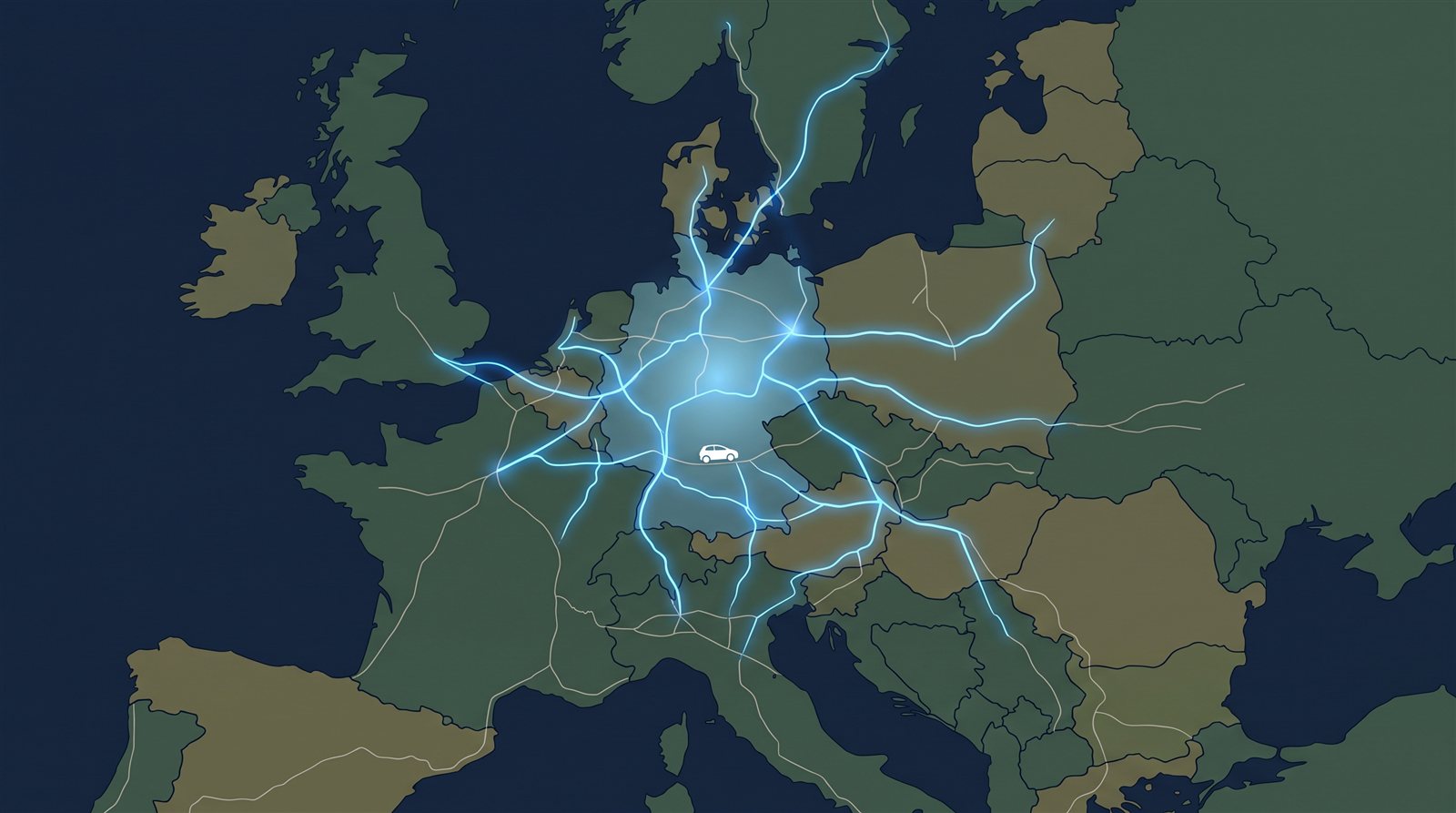
Note: "ninth" is the press's own count. The ministry says "one of the few countries." This article is for learning about science and technology and is not investment advice. The figure is an AI-generated illustration.
Thank you for reading. Was this article useful to you?
Thank you. If you like, tell us what you thought in a line or two.
Optional. No name or email needed.
Received. We will use your words to make better articles.