Battery preconditioning means warming the battery to a usable temperature in advance, before driving or charging. The Model Y owner's manual says that when you navigate to a charging location with Trip Planner, the car pre-heats the high voltage battery, which reduces charging time. Tesla recommends starting 30 to 45 minutes ahead. But we could not confirm the temperatures or the amount of time saved in official materials.
The previous article, What is Tesla's Octovalve?, covered a part that switches coolant paths to manage temperatures such as the battery's. In this article we look at how that system is used to warm the battery in advance, checking against the official owner's manual.
The conclusion: a function that warms the battery before you use it
The Model Y owner's manual (Cold Weather Best Practices) says this.
"it is helpful to warm the cabin and Battery before driving"
So preconditioning means warming the battery before you set off.
Why it is needed (from the owner's manual)
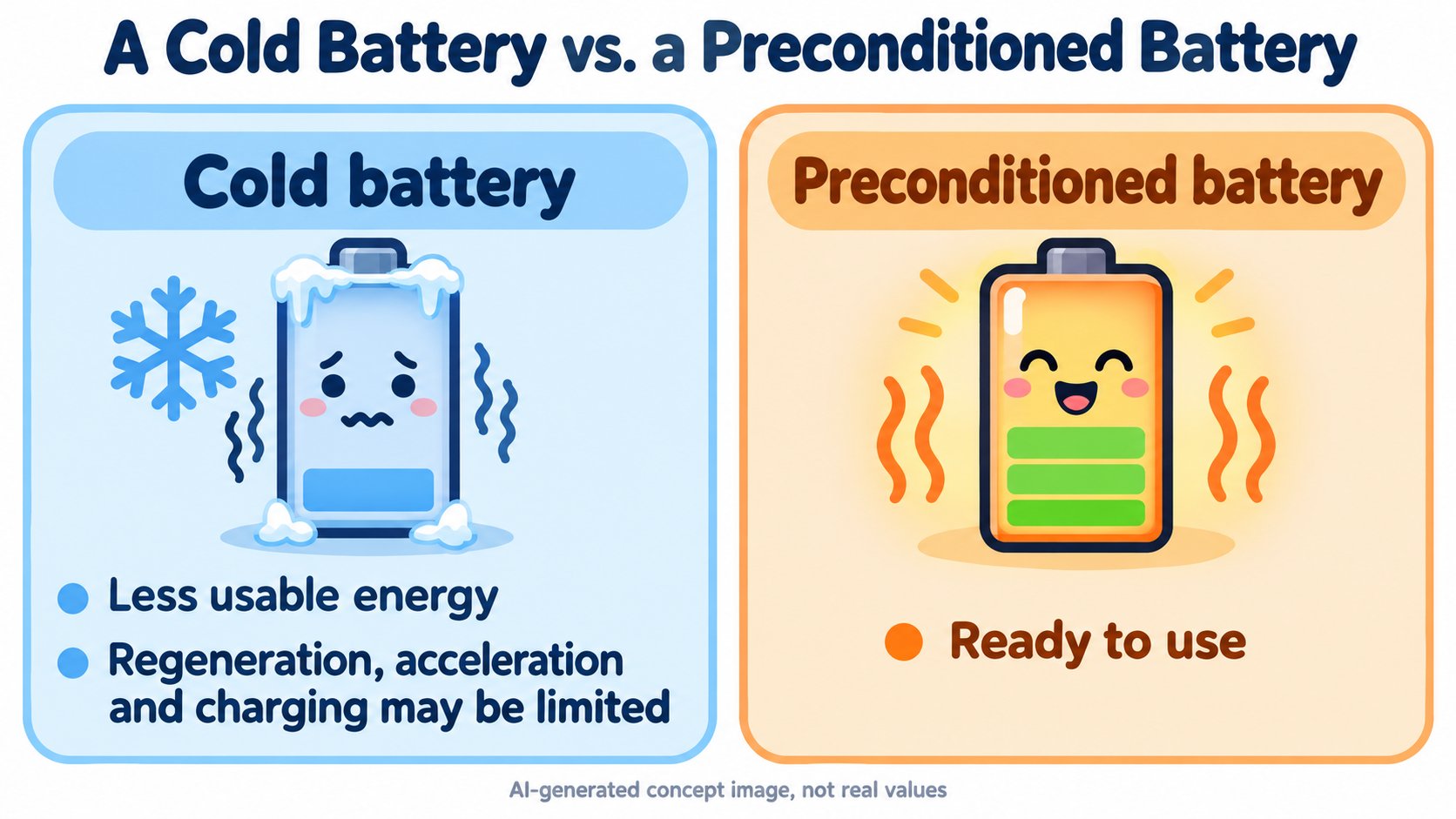
The manual explains that a cold battery causes the following.
- Some of the energy in the battery becomes unavailable. A blue snowflake icon appears on the screen.
- Regenerative braking, acceleration and charging rates may be limited.
- Regenerative braking is weaker while the battery is cold, and increases as the battery warms while you drive.
- In cold weather more energy is used for driving, cabin heating and battery heating.
Regenerative braking is a mechanism that uses the motor as a generator when you brake, to get electricity back.
The manual does not give numbers for "at what temperature, and how much, it is limited" in this section. The numbers are unconfirmed.
How to precondition (from the owner's manual)
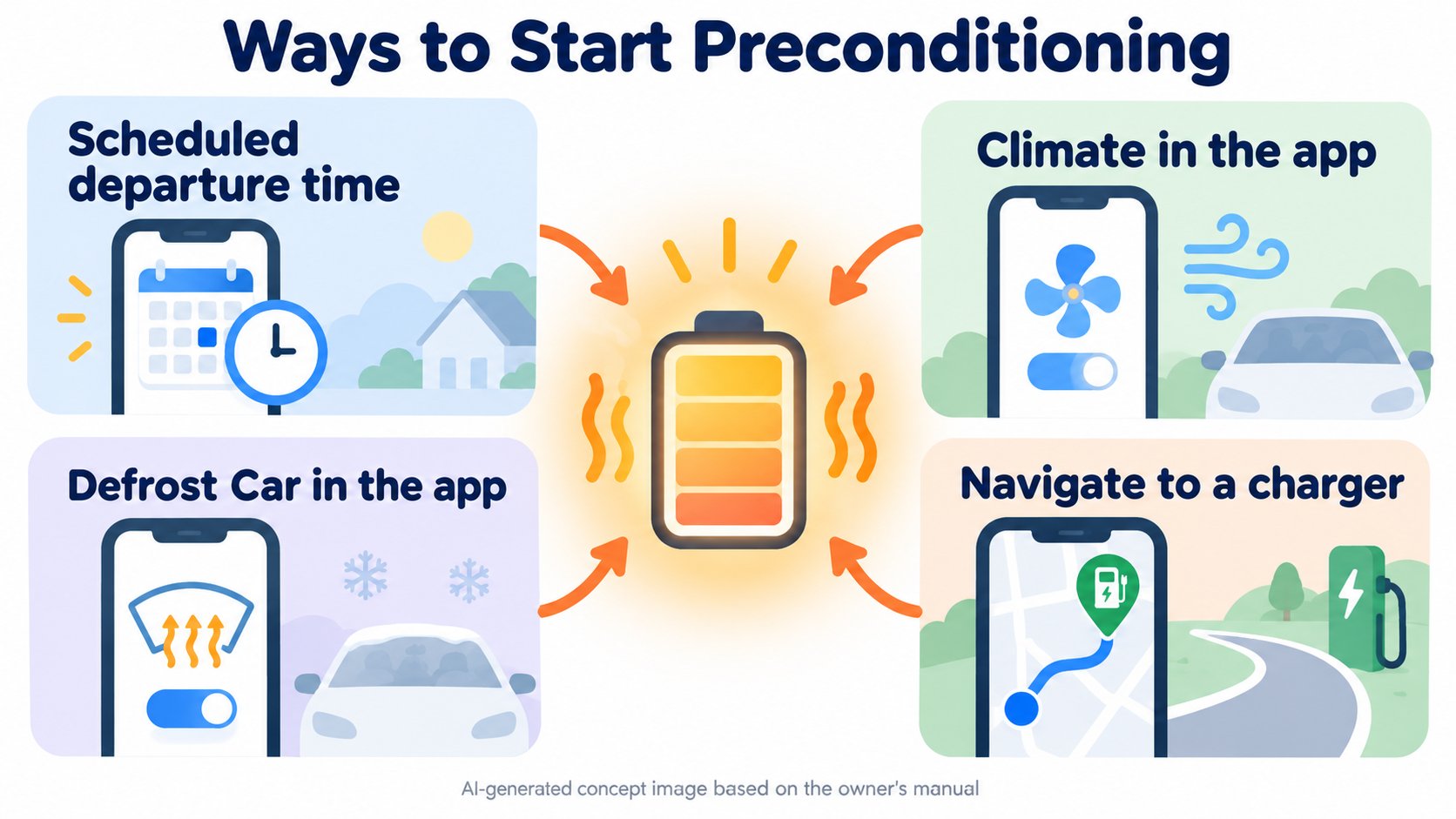
| Method | Content |
|---|---|
| Schedule (set a departure time) | You set the time you want to leave, and the car decides when to warm the cabin and battery to match |
| "Climate" in the mobile app | Heating the cabin "also warms the high voltage Battery as needed" |
| "Defrost Car" in the mobile app | Melting frost and ice on the windshield, charge port and so on "also warms the high voltage Battery as needed" |
| Navigating to a charger | When you navigate to a Tesla charging location (with Trip Planner), the car pre-heats the high voltage battery |
Preconditioning for charging
The manual says this about charging.
"pre-heats the high voltage Battery to ensure when you arrive at the charger, the temperature of the Battery is optimal and ready to charge. This reduces the amount of time it takes to charge."
Tesla also recommends using navigation to the charging location for at least 30 to 45 minutes before arrival. If the drive is shorter than that, the manual says to consider preconditioning before driving.
The Model S owner's manual (Hot Weather Best Practices) has a similar statement. Screens and names can differ by model and software version.
How does the Octovalve relate to preconditioning?
Octovalve patent US12365215B2 describes battery warming as usable for "preparing before charging" and "when cold conditions reduce range."
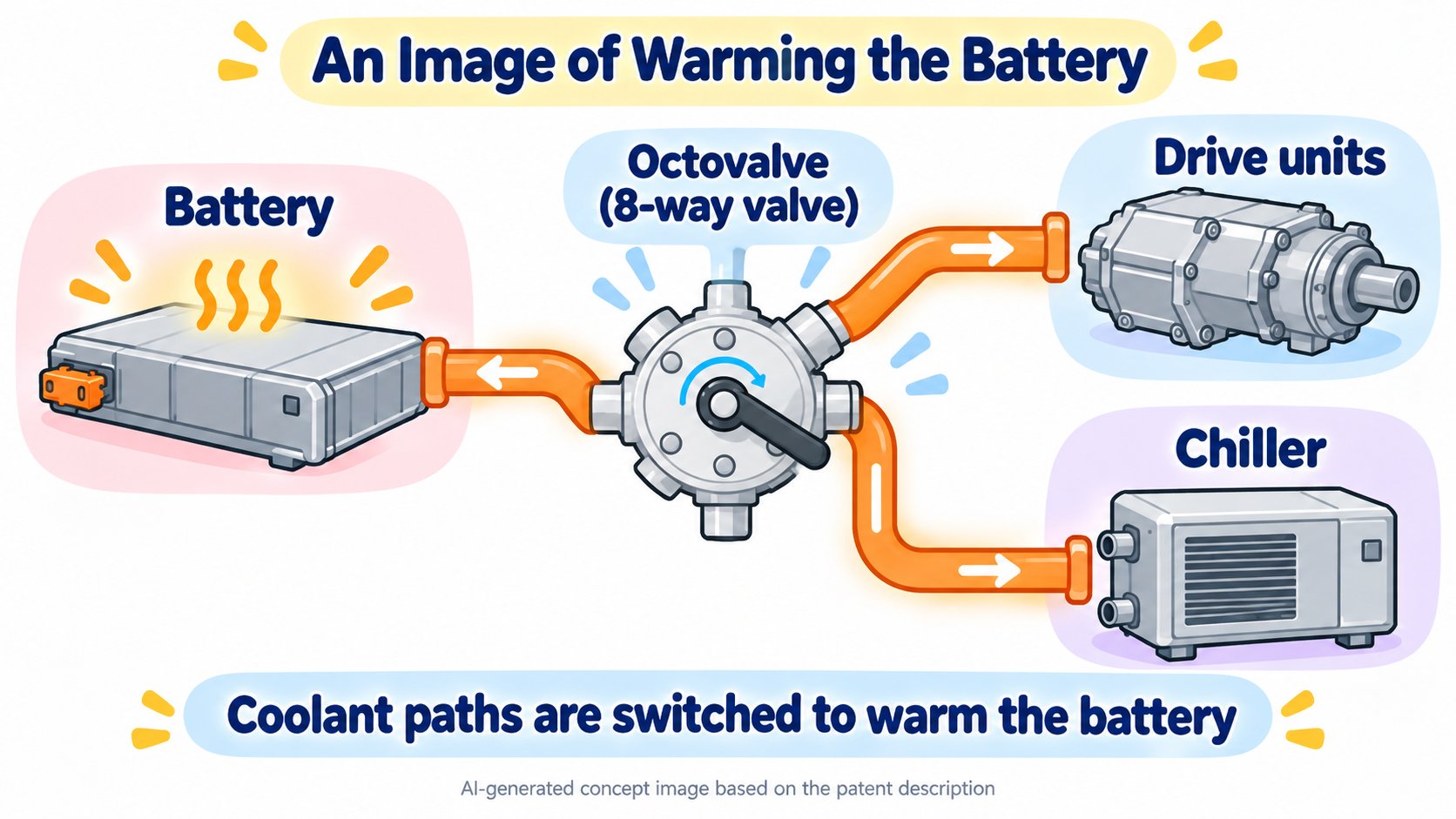
But the owner's manual does not mention the name Octovalve. And we could not confirm in official materials which of the patent's modes corresponds to what real cars do during preconditioning.
What we could not confirm
- The temperature the battery is warmed to.
- Official figures for how much charging time is shortened or how much range changes.
- How much electricity preconditioning uses.
- Differences in method between models (such as whether there is a dedicated heater). Some third-party articles describe model-by-model differences, but we could not confirm them in the owner's manual.
From how the manual is written, we can read the idea that "in winter, a cold battery tends to limit charging and regeneration, so it helps to warm it beforehand." But the size of the real effect should change with temperature and the battery's state, and we could not confirm it in this article.
FAQ
What is battery preconditioning?
Warming the battery to a usable temperature in advance, before driving or before charging.
How do I precondition?
The manual introduces a scheduled departure time, climate or defrost in the mobile app, navigating to a charger, and more.
When should I start?
Tesla recommends starting climate settings 30 to 45 minutes before departure, and using navigation to a charger for 30 to 45 minutes before arrival.
How many minutes faster does charging get with preconditioning?
The manual says "this reduces the amount of time it takes to charge," but we could not confirm a number of minutes.
Summary
- Preconditioning means warming the battery before driving or charging (Model Y owner's manual).
- A cold battery can reduce usable energy and limit regenerative braking, acceleration and charging (owner's manual).
- When you navigate to a charger, the car pre-heats the battery and charging time is reduced. Tesla recommends starting 30 to 45 minutes ahead.
- Temperatures, the amount of time saved, and model-by-model differences in method are unconfirmed.
Next: we will look, in order, at the motor and inverter that turn electric power into motion (coming soon).
Sources (checked 2026-10-15)
- Tesla Model Y Owner's Manual, "Cold Weather Best Practices" (no date shown): https://www.tesla.com/ownersmanual/modely/en_ae/GUID-F907200E-A619-4A95-A0CF-94E0D03BEBEF.html
- Tesla Model S Owner's Manual, "Hot Weather Best Practices" (no date shown): https://www.tesla.com/ownersmanual/2012_2020_models/en_jp/GUID-6F5B7B3F-F020-471D-9D46-D1F990A6237A.html
- U.S. Patent US12365215B2, "Electric vehicle heat pump using enhanced valve unit" (Tesla Inc, July 22, 2025): https://patents.google.com/patent/US12365215B2/en
This article is for learning about science and technology, and is not investment advice. Facts and the author's interpretation are kept separate. Figures are AI-generated illustrations.