TPMS warns you with a light on the touchscreen when a tire is significantly under-inflated. According to Tesla's Model 3 owner's manual (North America), a car has either direct TPMS (sensors in the wheels) or indirect TPMS (which estimates pressure loss). Target pressures are on the Tire and Loading Information label on the driver's center door pillar. Tires lose about 1 PSI for every 10°F (6°C) drop in outside temperature. Even with TPMS, keeping correct pressure is the driver's responsibility.
Tire pressure affects both safety and range. In this article we check what the Model 3 owner's manual ("Tire Care and Maintenance", North America, software 2026.32) says about tire pressure and TPMS.
The conclusion: TPMS is a backup; keeping pressure is the driver's job
The manual says (summary):
- TPMS (Tire Pressure Monitoring System) shows a warning light when a tire is significantly under-inflated (and, with direct TPMS, over-inflated).
- But TPMS is not a substitute for regular tire maintenance. Keeping correct pressure is the driver's responsibility, even before the light comes on.
- Under-inflation can overheat a tire, leading to cracking, tread separation or a blowout, and reduces range and tread life.
- Check each tire monthly, when cold (including the spare, if provided).
[A note for beginners]
PSI is a unit of pressure (1 PSI is about 6.9 kilopascals). In the car you can choose Bar or PSI under Controls > Display > Tire Pressure. (The conversion is general knowledge.)
Direct vs. indirect: which does your car have?
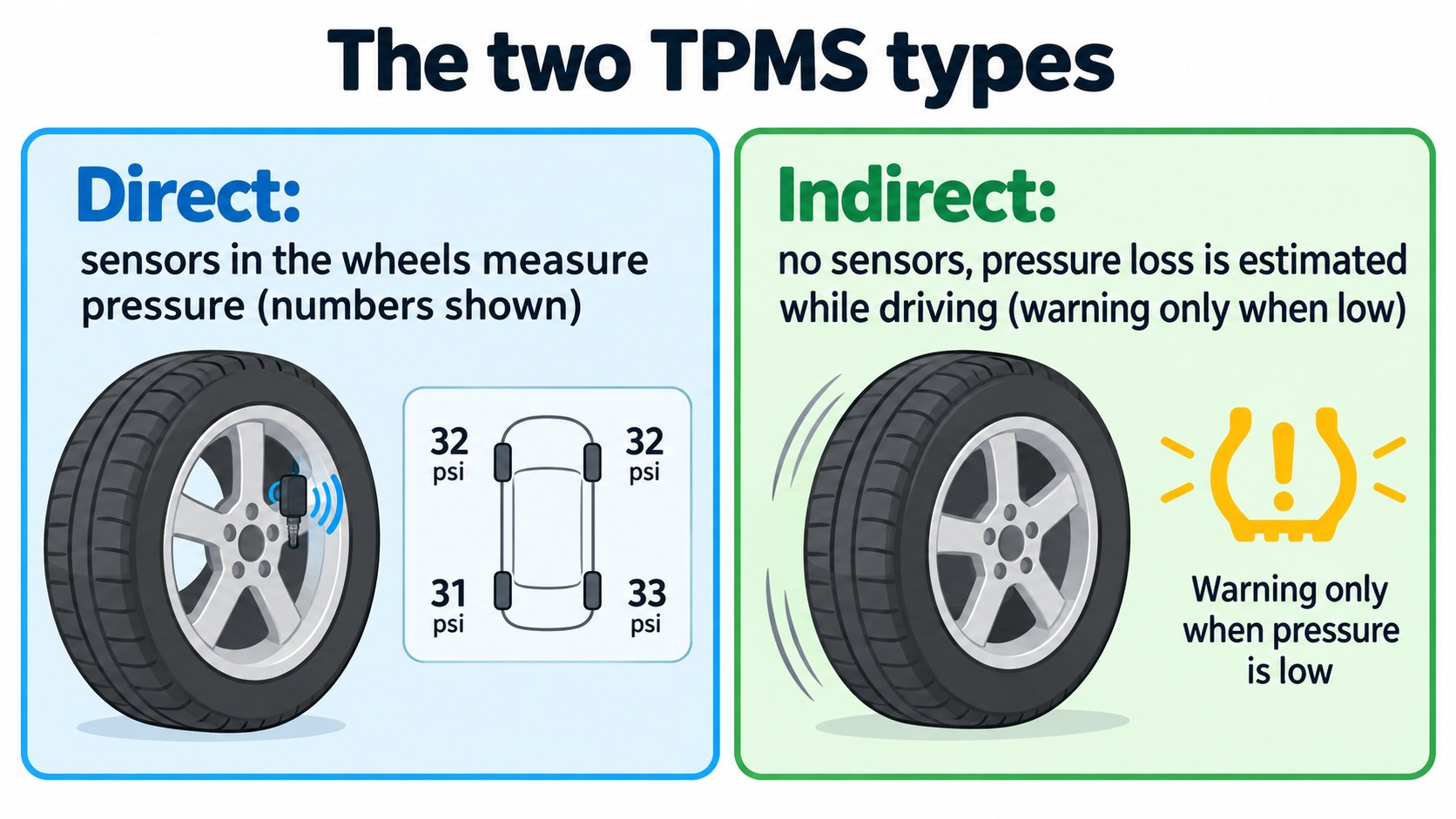
According to the manual, your car has one of two systems, depending on the configuration.
| Item | Direct TPMS | Indirect TPMS |
|---|---|---|
| How it measures | Sensors in the wheels measure pressure | Estimates pressure loss while driving, with no sensors |
| What the screen shows | Pressure of each tire (XX PSI) and when it was measured | Only an alert when low pressure is detected (amber = check, red = pull over) |
| Over-inflation warning | Yes | Not mentioned (low pressure only) |
| After changing pressure | Drive above 15 mph (25 km/h) briefly to activate | Manual calibration needed (at least 20 minutes of driving) |
| How to tell | If Controls > Service shows pressure values, it is direct |
How to set the pressure
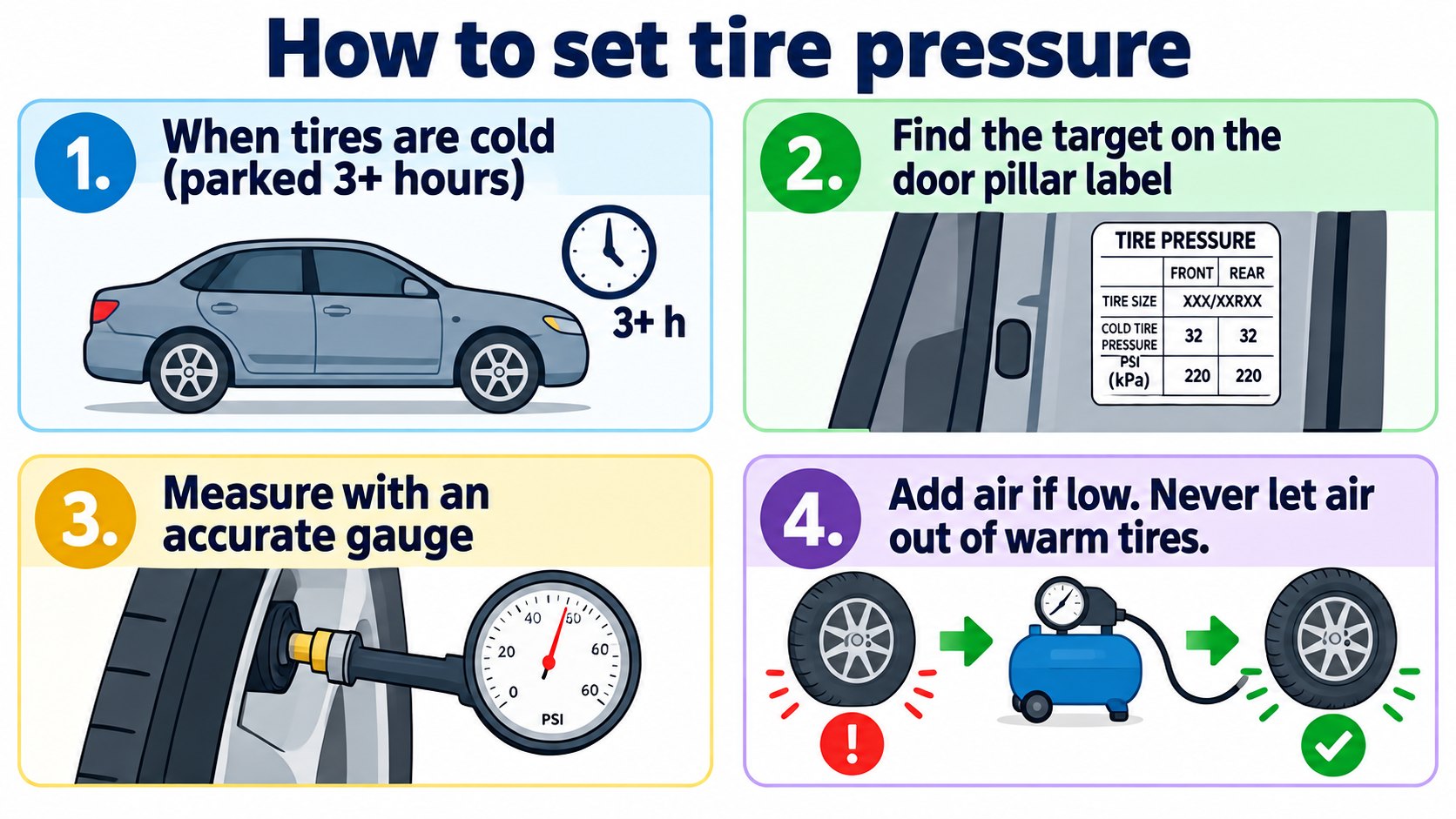
The manual's steps:
- Do it when the tires are cold and the car has been stationary for over three hours.
- Find the target on the Tire and Loading Information label on the driver's center door pillar (follow this label even if it differs from the number printed on the tire).
- Remove the valve cap and press an accurate gauge onto the valve.
- Add or release air as needed (pressing the metal stem releases air), then re-check.
- Refit the valve cap.
Warning: warm tires (about 1 mile / 1.6 km of driving is enough), direct sunlight or hot weather raise readings. Do not let air out of warm tires to match the cold target. A hot tire at or below the cold target is dangerously under-inflated.
Why the light comes on in winter
The manual says tire pressures drop in cold weather: if the TPMS light appears, inflate the tires before driving. Tires lose about 1 PSI for every 10°F (6°C) drop in outside temperature. Proper pressures also help protect tires from potholes and improve range.
Reading the light
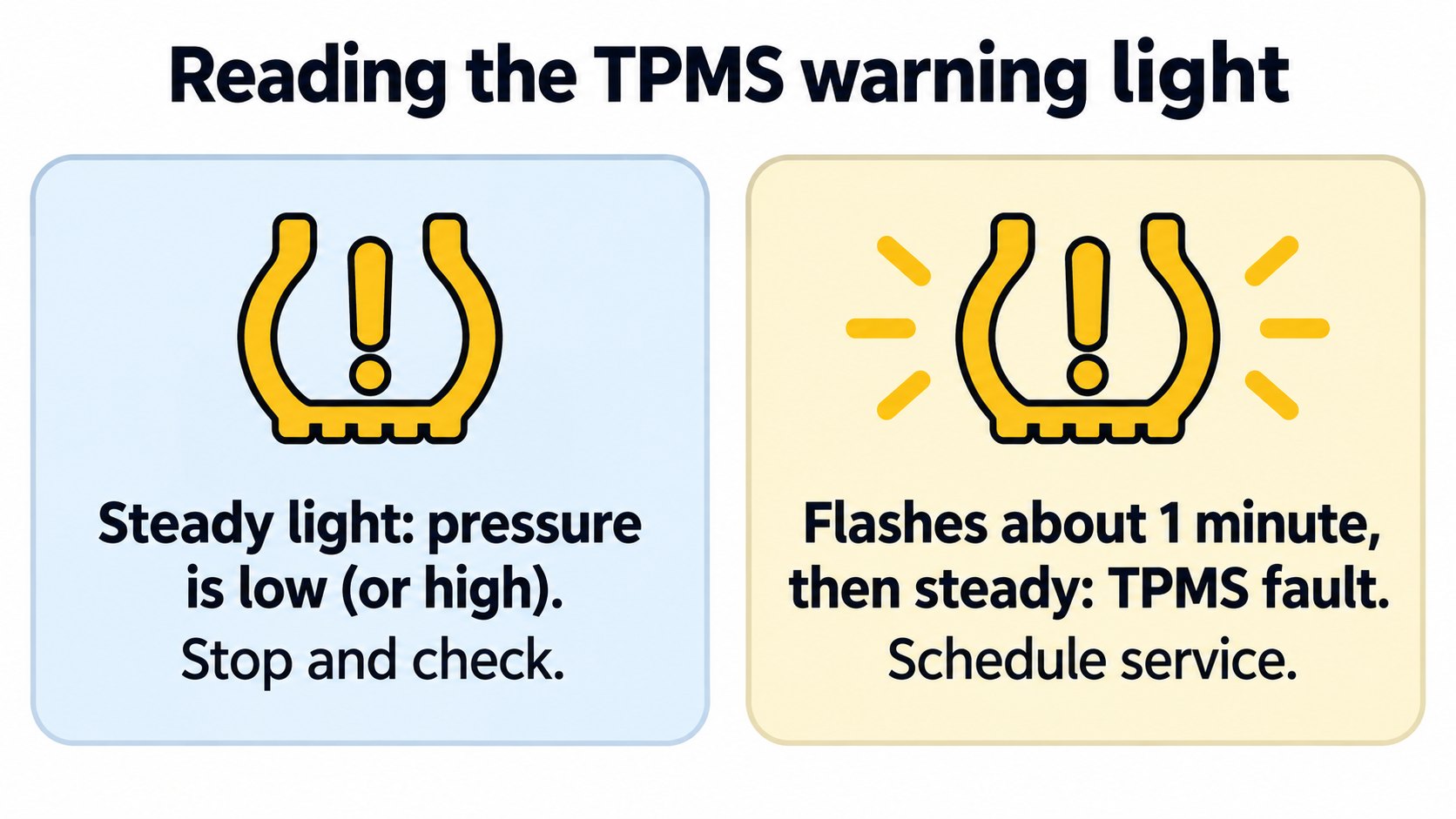
- Light on: one or more tires is under-inflated (or over-inflated on direct TPMS). Stop and check.
- It does not turn off immediately after you adjust pressure. On direct TPMS, drive above 15 mph (25 km/h) for a short time.
- Flashes for about a minute at start-up, then stays on: a TPMS malfunction. The system may not detect low pressure. Schedule service in the app.
- A fault can be caused by replacement tires or wheels. Check the light after changing them.
- Repairing with a different sealant than Tesla's may damage a sensor, and unapproved accessories can interfere with TPMS.
After changing or rotating tires
- After replacing a wheel (direct TPMS): the sensors relearn automatically within 10 minutes of driving above 15 mph (not after replacing only a tire).
- Indirect TPMS: after adjusting pressure, changing, repairing or rotating tires, calibrate manually (Controls > Service > Tire Pressure > Calibrate Tire Pressure), with pressures at the correct cold value.
- After rotating or replacing: update the tire configuration on screen (Controls > Service > Wheel & Tire). The rotation interval is 6,250 miles (10,000 km), or when tread depth differs by 2/32 in (1.5 mm) or more.
- Selecting winter tires in the settings speeds up regenerative braking recalibration (owner's manual). See Regenerative braking.
What we could not confirm
- Whether cars sold in Japan have direct or indirect TPMS (the manual says it depends on the configuration purchased).
- Target pressures in Japanese units (kPa) for each model. Read your car's label.
- How the sensors work internally (batteries, radio and so on); the manual does not say.
- Fine differences in manuals for other regions.
FAQ
What is TPMS?
A system that warns you with a light when a tire is significantly under-inflated. It does not replace regular checks; keeping pressure correct is the driver's responsibility (owner's manual).
Where do I find the target pressure?
On the Tire and Loading Information label on the driver's center door pillar, even if the tire itself shows a different number.
Is the light in winter a fault?
Not necessarily. According to the manual, pressure falls about 1 PSI for every 6°C drop. Inflate the tires before driving.
The light flashes every time I start the car.
According to the manual, flashing for about a minute and then staying on indicates a TPMS fault. Schedule service in the app.
What do I do after changing tires?
With direct TPMS, replacing a wheel makes the sensors relearn automatically. With indirect TPMS, calibrate manually. In both cases, update the tire configuration on screen.
Summary
- TPMS is a backup that warns of significantly low pressure. Keeping pressure is the driver's job (owner's manual).
- A car has direct (sensor) or indirect (estimated) TPMS; check Controls > Service.
- Set pressure when cold to the door pillar label. Never let air out of warm tires.
- Pressure drops about 1 PSI per 6°C of cooling.
- A light that flashes then stays on means a TPMS fault. Check it after changing tires or wheels.
Sources (checked 2026-10-16)
- Model 3 Owner's Manual, "Tire Care and Maintenance" (North America, 2024+, software 2026.32): https://www.tesla.com/ownersmanual/model3/en_us/GUID-94F63B13-EA2C-45D9-83AB-5DCA6295D587.html
This article is for learning about science and technology and is not investment advice. Facts and the author's reading are kept separate. The figures are AI-generated illustrations.
Thank you for reading. Was this article useful to you?
Thank you. If you like, tell us what you thought in a line or two.
Optional. No name or email needed.
Received. We will use your words to make better articles.