According to Tesla's maintenance guidance for the Model 3 (Do It Yourself), the battery coolant does not need to be replaced for the life of the vehicle under most circumstances. Its level should only be checked by Tesla or a professional repair shop, and damage caused by opening the battery coolant reservoir is excluded from the warranty.
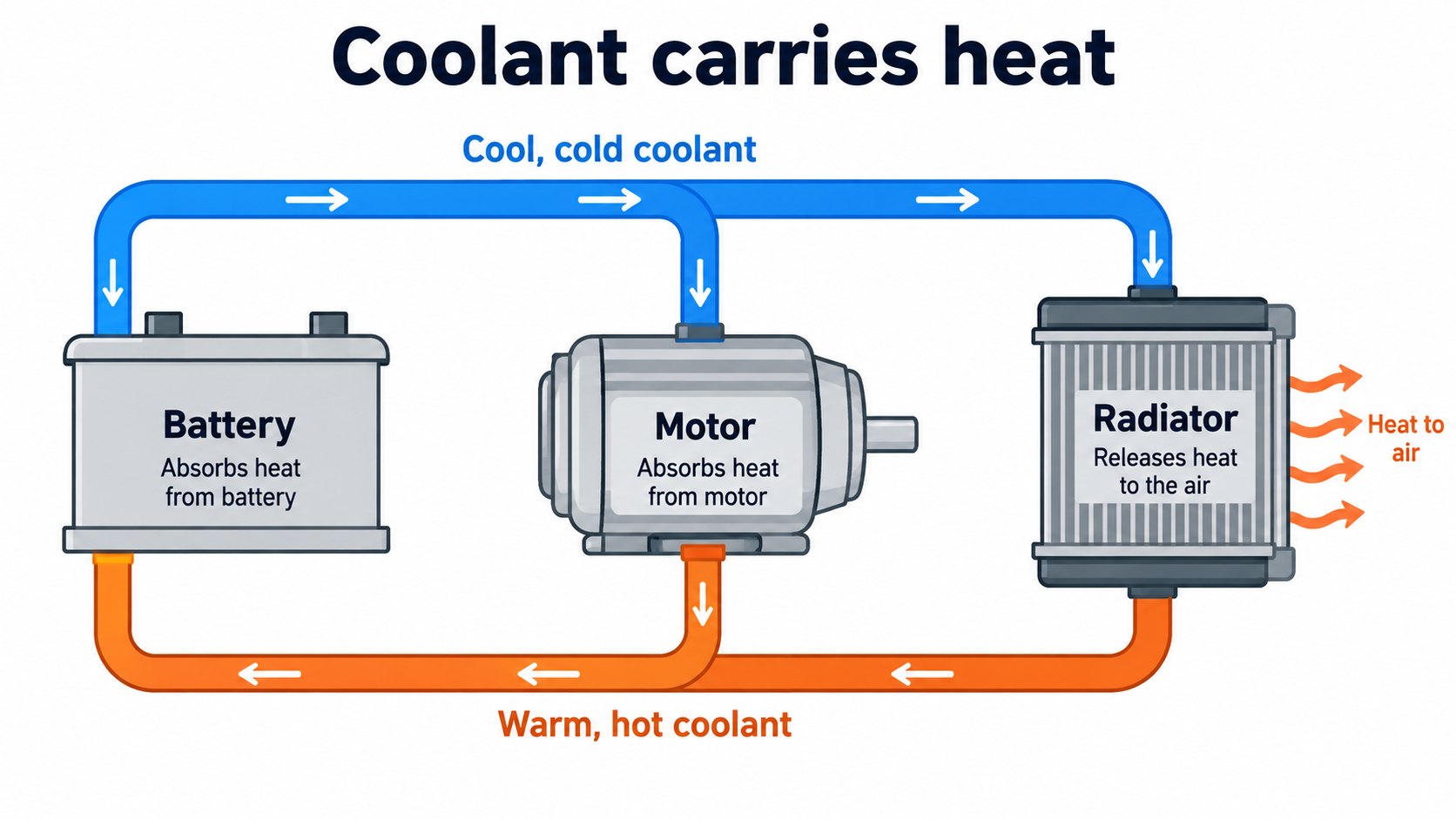
In The flow of heat and the Octovalve, we saw a liquid (coolant) carry heat away from the battery and motor. In this article we check, in Tesla's official sources, how owners should treat that coolant.
The conclusion: no replacement is expected, and owners leave it alone
The Model 3 Do It Yourself guide, "Fluid Replacement Intervals", says (summary):
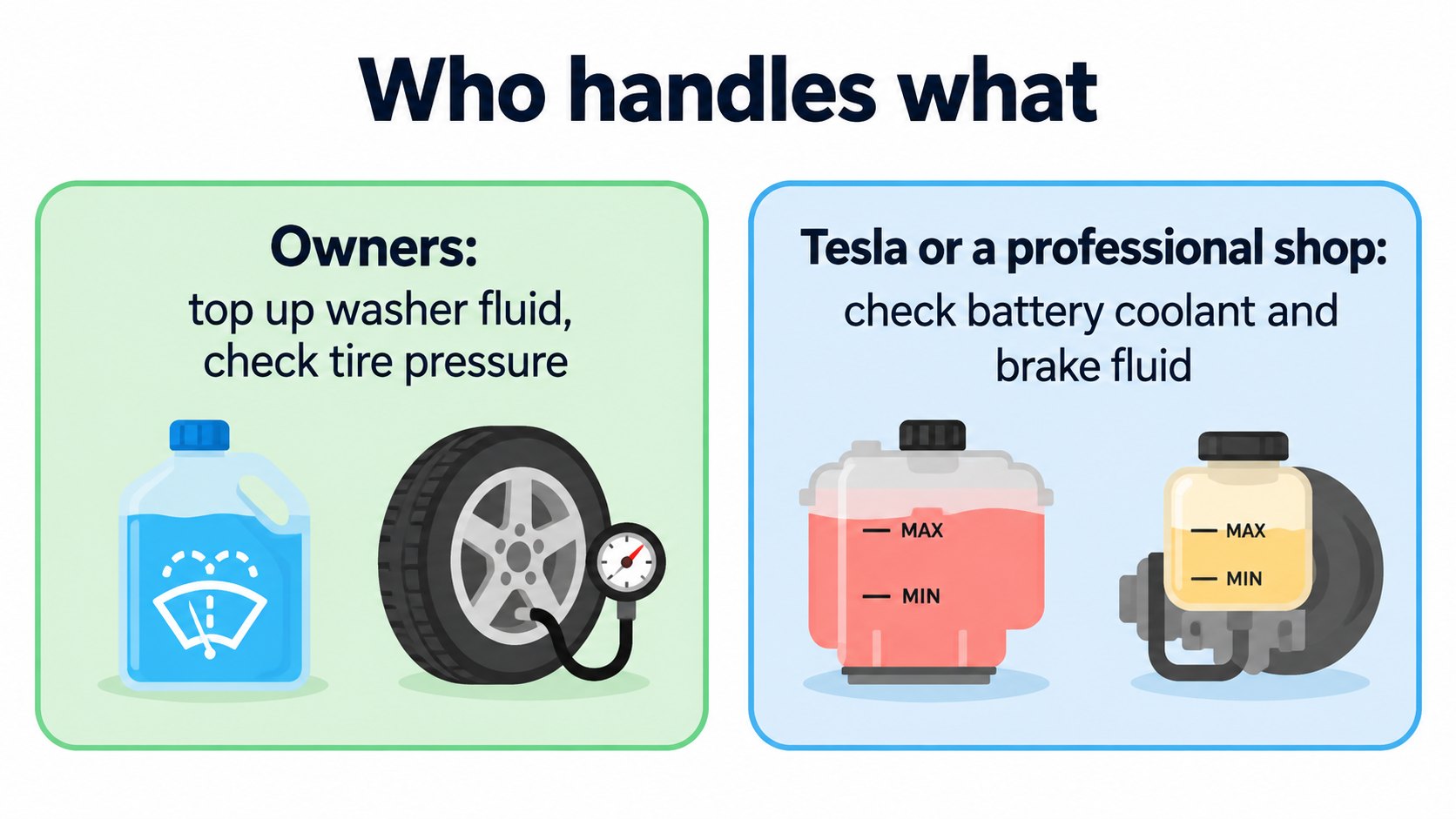
- Battery coolant and brake fluid levels should only be checked by Tesla or a professional automotive repair shop.
- Battery coolant: does not need to be replaced for the life of the vehicle under most circumstances.
- Brake fluid: do not top it up.
- Any damage caused by opening the Battery coolant reservoir is excluded from the warranty.
[A note for beginners]
Coolant is the liquid that takes up heat from the battery and motor and carries it to where it can be released. Its role is similar to the radiator fluid in a gasoline car.
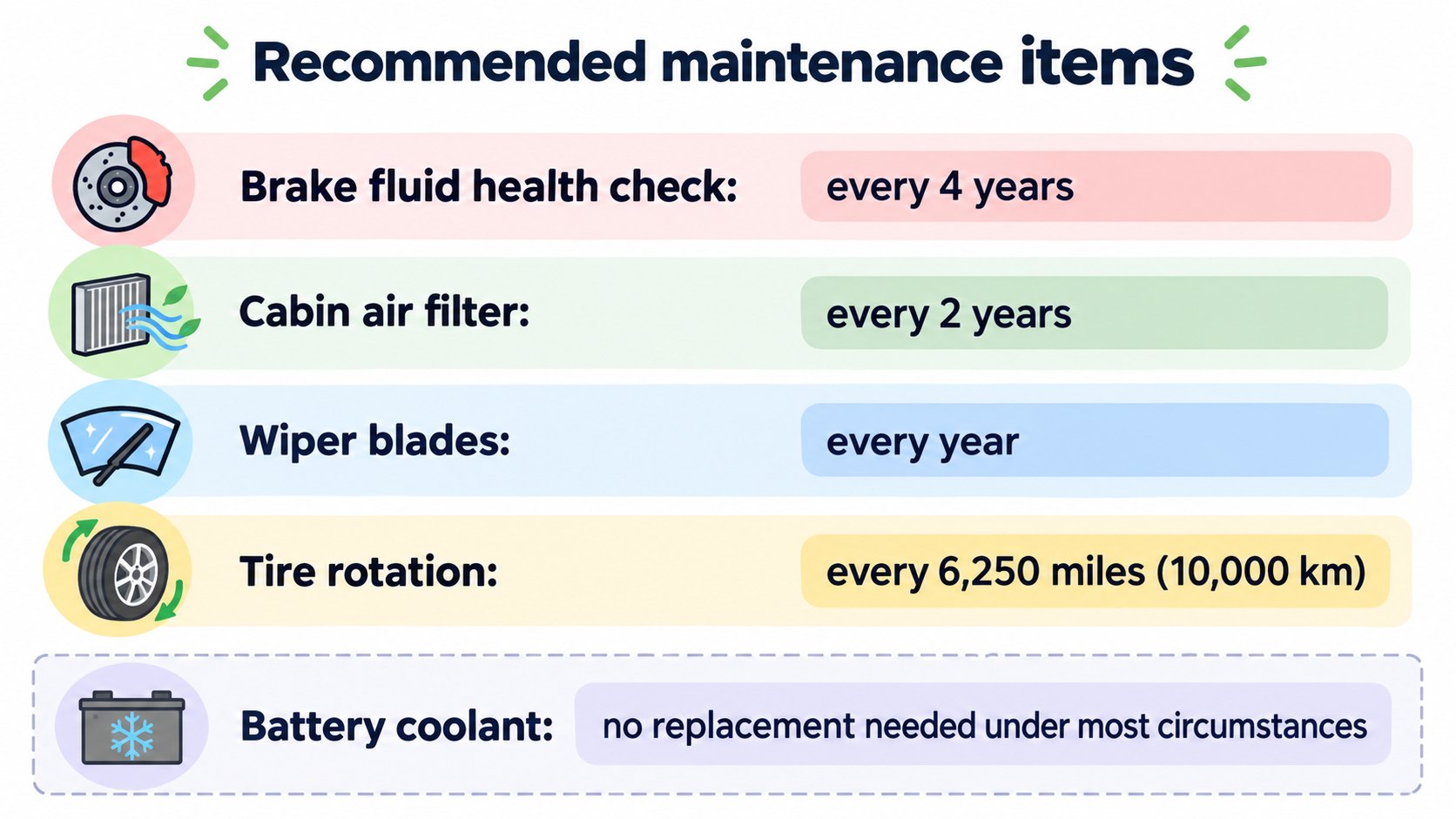
The recommended maintenance list on the same page ("Service Intervals") does not include coolant replacement. It lists a brake fluid health check (every 4 years, replace if necessary), cabin air filter replacement (every 2 years), wiper blades (every year), cleaning and lubricating brake calipers (every year or 12,500 miles / 20,000 km where roads are salted), tire rotation (every 6,250 miles / 10,000 km) and so on.
Compressor and cooling noises are normal
The same page also explains sounds you may notice:
- In hot weather the A/C compressor cools the battery as well as the cabin, so it can run even if you turned A/C off.
- Even when not in use, you may hear whining or water circulating, as internal cooling systems run to maintain the low-voltage battery and balance the temperature of the high-voltage battery.
- A small puddle under the car is water from the A/C dehumidifying and is normal. Other fluid deposits may indicate a leak, so check as part of your daily checks.
What the service manual says
The Model 3 service manual, "Cooling System (Check and Fill)", gives technicians these steps (summary):
- Wear protective equipment, including a full face mask.
- Remove the rear underhood apron.
- Remove the coolant bottle cap and fill coolant to the "Max" line.
- Reinstall the cap and the apron.
This is a procedure for service professionals, not for owners.
FAQ
Does Tesla coolant need replacing?
According to the Model 3 Do It Yourself guide, the battery coolant does not need to be replaced for the life of the vehicle under most circumstances.
Can I check the coolant level myself?
The same page says battery coolant and brake fluid levels should only be checked by Tesla or a professional repair shop. Damage caused by opening the reservoir is excluded from the warranty.
What if the coolant runs low?
We could not confirm this from the original. Check your owner's manual and contact Tesla if a warning appears on the touchscreen.
What type of coolant is it?
We could not confirm that here.
Summary
- Battery coolant does not need replacing for the life of the vehicle under most circumstances (Model 3, Do It Yourself).
- Only Tesla or a professional shop checks the level. Damage from opening the reservoir is excluded from warranty.
- The service manual says to fill to the "Max" line; it is for technicians.
- The coolant type, the original warning text and the exceptions were not confirmed.
Sources (checked 2026-10-16)
- Model 3 Do It Yourself, "Maintenance Service Intervals": https://service.tesla.com/docs/Public/diy/model3/en_us/GUID-E95DAAD9-646E-4249-9930-B109ED7B1D91.html
- Model 3 Service Manual, "Cooling System (Check and Fill)": https://service.tesla.com/docs/Model3/ServiceManual/2024/en-us/GUID-5A7C1AFE-9634-49A7-9CA2-6330E9161182.html
This article is for learning about science and technology and is not investment advice. Facts and the author's reading are kept separate. The figures are AI-generated illustrations.
Thank you for reading. Was this article useful to you?
Thank you. If you like, tell us what you thought in a line or two.
Optional. No name or email needed.
Received. We will use your words to make better articles.